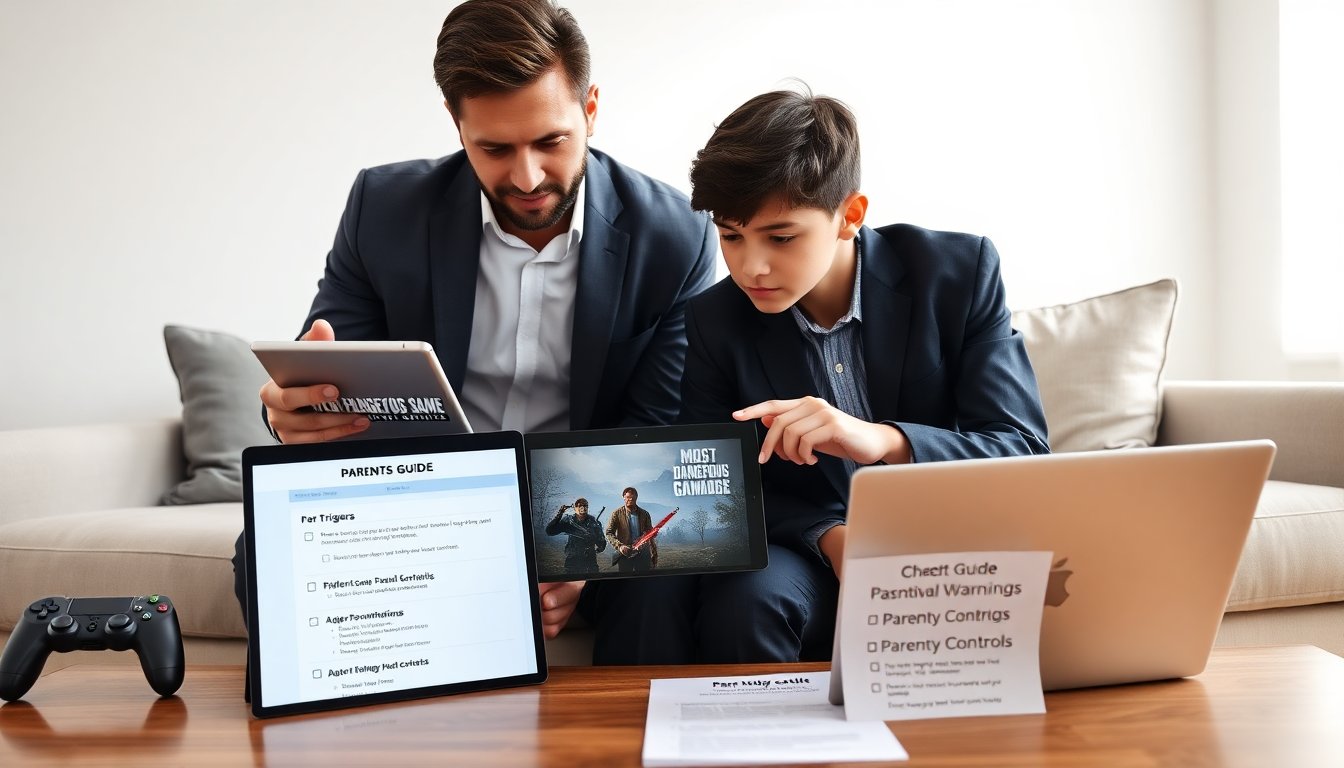
most dangerous game parents guide helps caregivers assess risk quickly. This guide lists ratings, violence types, triggers, and safety steps. It highlights platform controls and conversation tips. It gives clear actions parents can take today to keep kids safe while they play.

Key Takeaways
- The most dangerous game parents guide helps caregivers quickly assess game risks by detailing violence types, triggers, and safety measures.
- This survival shooter is rated M by ESRB and 16 or 18 by PEGI due to strong violence and mature themes, indicating it targets adults, not children.
- Parents should monitor for anxiety or distress in children caused by graphic content like injuries and stalking scenes, and limit playtime accordingly.
- Using parental controls on consoles and PCs, such as time limits and content filters, is essential to ensure safe gameplay experiences.
- Parents are encouraged to preview the game, consider their child’s emotional maturity, and co-play to help distinguish game fiction from reality.
- Setting clear rules, encouraging open dialogue, and watching for stress signs supports children’s wellbeing while engaging with the most dangerous game.
Quick Overview: What Parents Need To Know About This Title
The most dangerous game parents guide focuses on a single survival shooter title that mixes hunting and PvP. The game targets mature players and includes tense chase scenarios. Critics praise its atmosphere and pacing. Players report sudden shock moments and persistent tension. Parents should note that the title uses realistic weapons and stealth mechanics. For news and guided coverage, sites that cover game guides provide walkthroughs and context for difficult sections.
Age Recommendations, ESRB/PEGI Ratings, And What They Mean
The ESRB and PEGI give formal age guidance based on content. The ESRB may assign an M rating for strong violence and language. PEGI may assign a 16 or 18 rating for similar reasons. Those ratings mean the title targets adults, not children. Parents should match ratings to a child’s maturity, not just age. They should read descriptor boxes for blood, language, and online interaction. For aggregated critic scores that reflect reception and suitability, parents can consult industry reviews to see how professionals rated the experience.
Content Warnings And Potential Triggers To Watch For
The game contains graphic injuries, loud sudden sounds, and scenes of stalking. It also contains implied torture and scenes where characters suffer. The game may include drug references and strong profanity. Those elements can trigger anxiety, nightmares, or stress in some players. Parents should watch for changes in sleep, mood, or play avoidance. They should skip levels or cut play time when a child shows distress. For broader culture context and how creators present sensitive moments, readers can consult reporting on gaming culture.
Nature Of The Violence, Threats, And Mature Themes
The title shows close-up injuries and point-blank encounters. The game rewards stealth kills and high-risk tactics. It frames violence as survival, not heroics. The narrative can present moral ambiguity and character breakdown. Those themes carry emotional weight and can affect impressionable players. Parents should note the difference between stylized action and realistic physical harm. They should consider whether their child understands context and can separate game actions from real behavior.
Parental Controls, Platform Settings, And Practical Safety Steps
Consoles and PC platforms offer time limits and content filters. Parents should enable account-level restrictions and require approval for purchases. They should set mature-content blocks and limit voice chat with strangers. Parents should update privacy settings to remove friend invites from unknown players. They should place the console or PC in a shared space to monitor sessions. They should use platform reports to block abusive users and preserve screenshots for evidence. Parents should also test the game themselves to see the scenes before allowing play.
How To Decide If This Game Is Right For Your Child
Parents should match the game to a child’s emotional maturity and past reactions to scary media. They should preview the title and read ratings and reviews. They should ask the child about prior exposure to violent films or games. They should start with short sessions and watch for stress signs. If a child has anxiety or trauma history, parents should avoid this title. They should consult a pediatrician or counselor when unsure. The decision should prioritize the child’s wellbeing over peer pressure or trends.
Setting Rules, Co‑Play Tips, And Talking Points For Parents
Parents should set clear time limits and enforce regular breaks. They should co-play to model calm responses to tense moments. They should ask the child to describe what they find upsetting and why. Parents should explain the difference between game fiction and real consequences. They should prepare simple rules for in-game chat and friend requests. They should encourage honest reports of upsetting content and reward breaks when needed. Simple phrases such as “tell me when it feels too much” make it easier for a child to speak up.