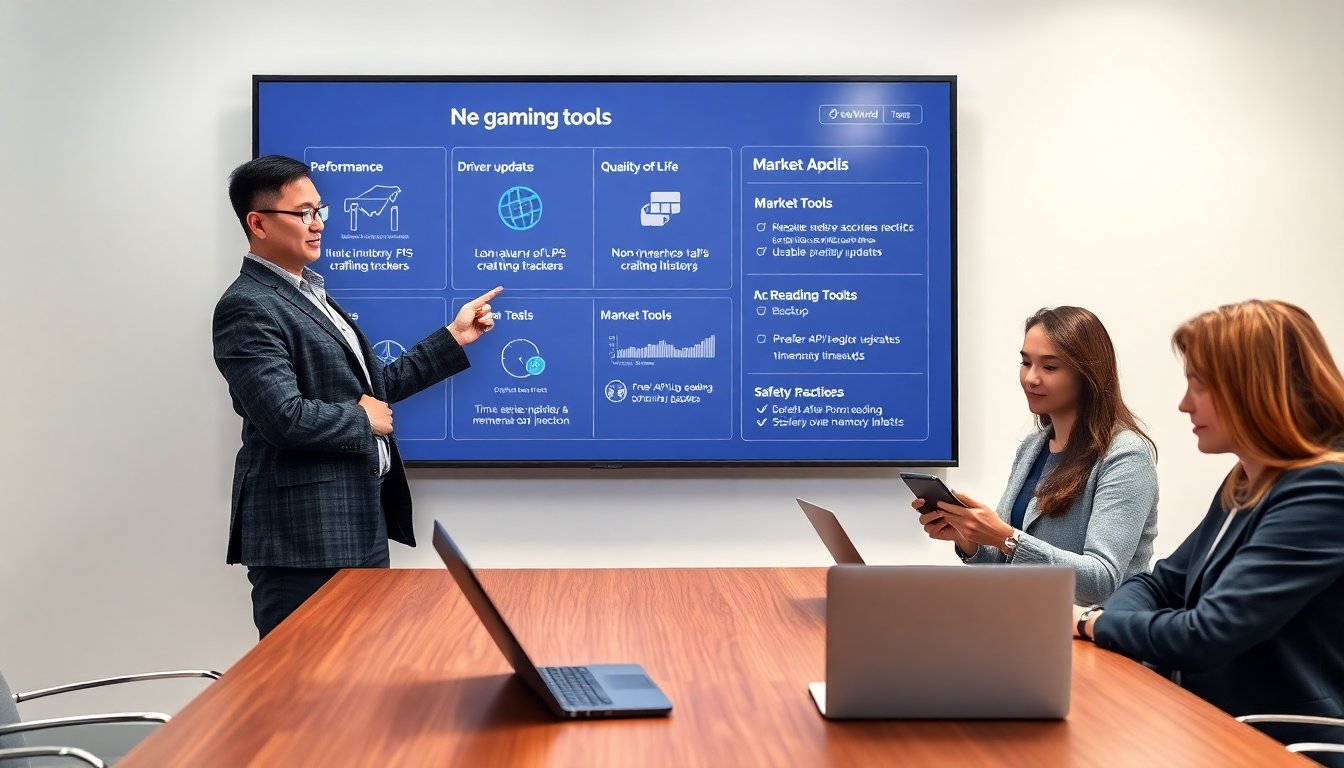
The guide covers gaming tools new world players use to boost performance, improve loot tracking, and speed crafting. It lists tool types, risks, and safe setups. Readers learn which tools they need, how to check stability, and where to find reliable community data.

Key Takeaways
- Gaming tools new world players use focus on performance, quality-of-life improvements, and market analysis to enhance gameplay and efficiency.
- Performance tools optimize FPS and input latency without altering game memory, reducing risks of bans and crashes.
- Quality-of-life tools help manage inventory, crafting, and map tracking by using external apps that parse logs instead of injecting overlays.
- Market tools rely on public data scraping for safe, reliable price tracking, helping players make informed trading decisions without compromising account security.
- Players should prefer tools with clear version histories, user reviews, and that comply with game terms to maintain stability and avoid penalties.
- Utilizing community-shared pro player settings for sensitivity and keybinds can improve control and competitive performance in New World.
Which Tools Matter: A Quick Guide To Tool Types And Risks
Players choose gaming tools new world to solve specific problems. Some tools target FPS and input lag. Other tools manage inventory or show map data. Third-party overlays can change game memory and cause bans. Users should read terms before installing any mod or overlay.
Tools fall into three simple types: performance, quality-of-life, and market helpers. Performance tools adjust drivers and settings. Quality-of-life tools add interfaces for inventory or crafting. Market helpers gather price and trade history.
They must weigh benefits against risk. A tool that hooks game memory can improve loot tracking but it can trigger automated ban systems. Players should prefer tools that read logs or scrape public APIs instead of injecting into the game. They should keep backups and disable tools before major updates. This reduces crashes and prevents corrupted saves.
Top Must-Have Tools For Performance And Stability
Players pick performance tools to keep frame rates high and input consistent. They install driver update tools, FPS overlays, and configuration managers. These tools let players match GPU settings to New World demands and avoid stutters.
They monitor hardware with guides and tests from reputable publications. For example, one can compare card behavior using a trusted hardware benchmarks reference. They also apply tuned game configs and limit background apps. This reduces CPU and disk contention.
Input and latency matter in PvP. They adopt a low-latency mouse driver and a consistent polling rate setup. They test settings in small windows before large battles. They also use simple FPS overlays that only read performance counters. These overlays do not alter game memory and they lower risk of account action.
Tools that automate driver updates and clean boot entries help maintain stability. Players make a restore point before major driver changes. They also keep a short changelog so they can undo settings that cause crashes.
Quality-Of-Life And Gameplay Tools (Inventory, Map, And Crafting)
Players use quality-of-life tools to save time on inventory and crafting. They add map markers, track material nodes, and plan craft queues. These tools reduce busywork and keep players focused on play.
Some tools run as external apps that parse exported logs or user-entered data. They avoid overlays that inject into the process. Players prefer tools with export and import features so they can move data between accounts or devices. They also value clear version histories and changelogs to match game updates.
For mods and community-made tools, players visit a central mod repository. That repository hosts mod packs, installation instructions, and user reviews from other players. A reliable mod repository helps players pick widely used options with low incident reports.
Community, Trading, And Market Tools, Where To Find Reliable Data
Market tools collect trade records and list historical prices. They show trends, volume, and item rarity. Players use these tools to set sell prices and to avoid flooded markets.
They check data sources before trusting a tool. Tools that scrape public market pages give fast results. Tools that require account credentials add risk and they should be avoided unless they use secure, read-only tokens. Players read community threads and watch for repeated reports of incorrect data. They also prefer tools that display data provenance and timestamps.
For gear and control settings, many players copy setups used by professionals. A resource for these configurations offers sensitivity and keybind lists that players can adapt. Players compare their settings to pro lists and then test changes in a controlled environment. One can find community-shared pro player settings that detail sensitivity, DPI, and common bindings.