Gaming in 2026 isn’t what it was five years ago. The landscape has fractured into multiple dimensions, literally. Players can jump between AAA console blockbusters, sprawling PC MMOs, quick-hit mobile experiences, and fully immersive VR environments without leaving their home. New world gaming isn’t about choosing one platform or genre anymore: it’s about navigating an increasingly interconnected ecosystem where cross-play is standard, live service models dominate, and the line between casual and competitive has blurred. Whether you’re a hardcore esports competitor grinding ranked matches, a story-driven narrative junkie, or someone who games in 10-minute bursts on your phone, 2026 offers something specifically built for you. This guide cuts through the noise and breaks down what defines modern gaming, where the industry is headed, and how to find your place in it.

Key Takeaways
- New world gaming has evolved from one-time purchases to interconnected live service ecosystems where cross-platform play, seasonal content, and community engagement are foundational.
- Five defining characteristics shape modern gaming: cross-platform accessibility, live service models, community emphasis, visible progression systems, and built-in accessibility options.
- PC gaming remains the technological frontier with ray-traced visuals and upscaling tech enabling 240+ FPS at 1440p, while consoles innovate through haptic feedback and backward compatibility rather than raw power.
- Mobile gaming has matured into a serious platform with production values rivaling consoles, while VR and AR experiences offer immersion unavailable on flat screens, though high entry costs remain a barrier.
- Esports is now a sustainable career with million-dollar prize pools and mainstream broadcaster support, while casual players can compete through tier-based ranked systems and grassroots tournaments requiring manageable time investment.
- Finding your gaming niche requires identifying your primary motivation—competition, story, relaxation, or social connection—and matching it with platforms and genres rather than chasing trends or trying to play everything.
What Defines New World Gaming Today
Evolution From Traditional Gaming
Traditional gaming, think early consoles, arcade cabinets, and single-player campaigns with defined endpoints, operated within clear boundaries. You bought a game, finished the story, and moved on. Graphics were limited. Online connectivity was a bonus feature, not the core experience. Multiplayer meant split-screen or LAN parties.
New world gaming has demolished those boundaries. Modern games are living spaces, not products with expiration dates. They update constantly. New seasons introduce fresh content every few weeks. Battle passes, cosmetics, and seasonal challenges keep players engaged long after launch. The shift from one-time purchase to ongoing live service fundamentally changed how games are designed, monetized, and experienced.
Players don’t “complete” games like Final Fantasy XIV or Valorant, they inhabit them. The multiplayer elements that were once secondary features are now primary. Progression systems are elaborate and designed for long-term engagement. And perhaps most significantly, gaming is now social by default, not by exception.
Key Characteristics of Modern Gaming
Five features define new world gaming in 2026:
Cross-Platform Accessibility. Playing on PC doesn’t exclude you from playing with console friends. Mobile titles sync seamlessly with their desktop versions. This interconnectedness is expected, not exceptional.
Live Service Models. Games launch as foundations, not finished products. Content drops, balance patches, and seasonal updates are standard. This keeps communities active but also requires ongoing developer support and can create FOMO (fear of missing out) around limited-time events.
Emphasis on Community. Ranked ladders, guilds, Discord servers, and content creator ecosystems are integral to modern games. Your experience is shaped by the people you play with. Toxic communities actively harm retention: welcoming ones create lifelong players.
Progression Visibility. Players want to see tangible progression. Whether it’s cosmetic cosmetics, rank advancement, battle pass levels, or skill-based rankings, the metrics for improvement must be transparent and frequent. Grinding without visible rewards feels hollow.
Accessibility Options. Modern AAA and even indie titles now include colorblind modes, remappable controls, adjustable difficulty, and visual/audio accessibility features. Gaming is increasingly treating accessibility not as an afterthought but as a design priority.
These characteristics shape everything from game design to community management to monetization strategies.
Platform Innovations Shaping Gaming in 2026
PC Gaming Advancements
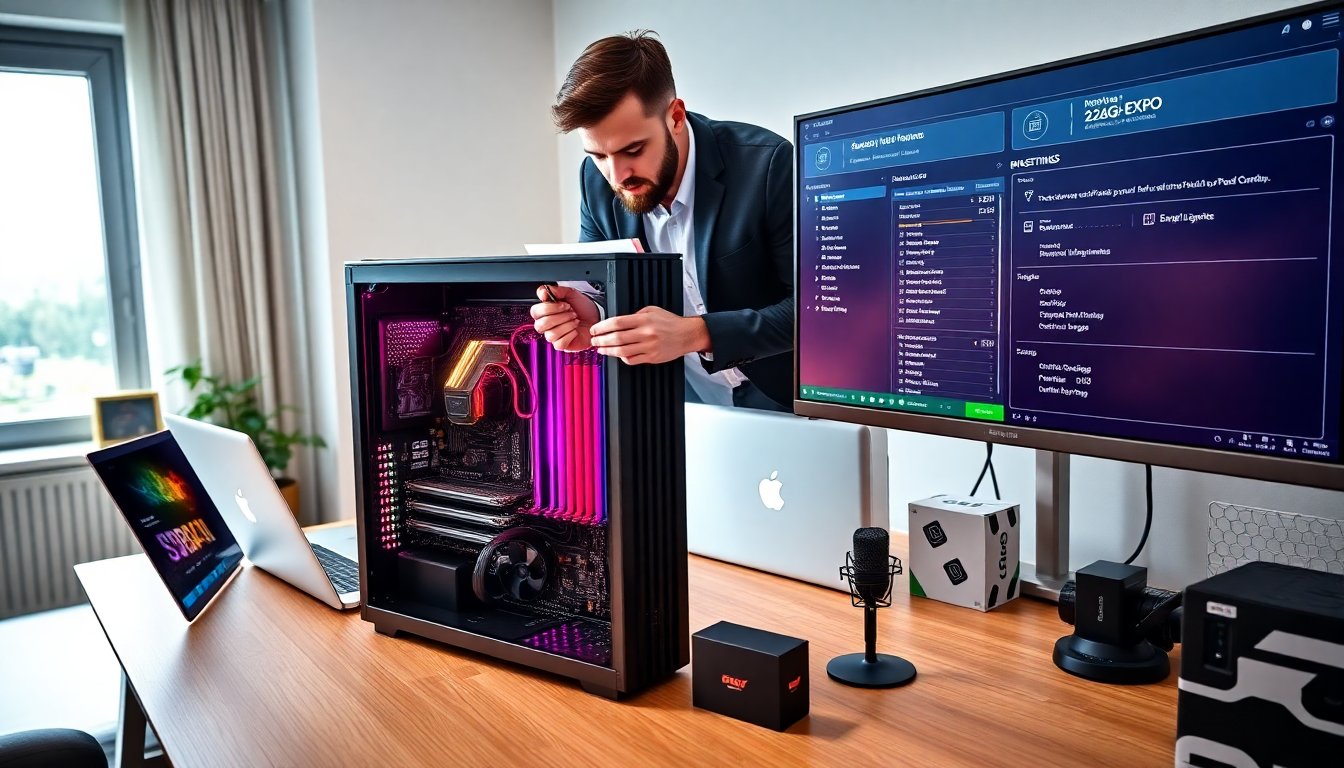
PC gaming remains the technological frontier. High-end GPUs now deliver ray-traced visuals that blur the line between pre-rendered cinematics and real-time graphics. DLSS 4 and competing upscaling technologies allow players to run demanding games at high frame rates without traditional performance compromises. 1440p at 240+ FPS is now achievable on mid-range hardware, not just high-end rigs.
Storage has also evolved. NVMe SSDs are standard, making sub-second load times normal. Games that previously required 5+ minutes to load now launch in seconds, fundamentally changing how worlds are designed. Streaming technology on PC is more sophisticated, with platforms like Twitch and YouTube supporting higher bitrates and better quality.
The modding ecosystem remains unmatched. Players can completely transform games, new mechanics, balance changes, visual overhauls, even entire new campaigns. This extends game lifecycles indefinitely. But, anti-cheat systems have become stricter, sometimes restricting what modders can do in online games.
According to recent gaming news, PC gaming continues to dominate competitive titles, with esports infrastructure increasingly built around mouse-and-keyboard input and the precision PC gaming offers.
Console Gaming’s New Era
PS5 and Xbox Series X are well into their cycle now, and the generations blur. Both platforms offer Quick Resume and near-instant loading. Backward compatibility means your library from previous generations still plays perfectly. Cross-generation multiplayer is standard, you’re not locked out of games if you’re on “older” hardware.
The real innovation isn’t raw power anymore: it’s the controller tech and system integration. PS5’s haptic feedback and adaptive triggers create tactile feedback that fundamentally changes gameplay feel. Games that use these features well (like Gran Turismo 7 or Astro’s Playroom) feel notably different from their cross-platform counterparts. Xbox Game Pass remains the strongest value proposition in gaming, day-one access to Microsoft’s first-party titles plus a rotating catalog of third-party games.
Console exclusives are dying. Nearly every major release lands on both platforms within a year. This drives multiplayer consolidation, you’re more likely to find friends on cross-platform titles than platform-locked games.
Mobile Gaming’s Growing Dominance
Mobile gaming isn’t casual anymore. Games like Honkai: Star Rail and Genshin Impact attract millions of players across iOS and Android, with production values rivaling console titles. The monetization model is controversial, but the gameplay is undeniably sophisticated. Turn-based RPGs, auto-battlers, tower defense, and roguelikes dominate mobile, each optimized for pick-up-and-play sessions.
Cloud gaming integration means high-end console/PC games are increasingly accessible on smartphones. You can play full versions of demanding titles through streaming services, limited mainly by network latency and data bandwidth.
Tablet gaming occupies a fascinating middle ground. The larger screen makes strategy games and action games feel more like console experiences. iPad has become a legitimate gaming platform, not a compromise between phone and PC.
Emerging Game Genres and Gameplay Experiences
Immersive and Virtual Reality Gaming
VR gaming left the gimmick phase. Headsets like PlayStation VR2 and Meta Quest 3 offer genuinely compelling experiences, not just novelty. Games like Half-Life: Alyx and Resident Evil 4 VR demonstrate that VR isn’t a separate genre, it’s a platform for existing genres executed differently.
The challenge remains entry cost and space requirements. Most VR games require motion controllers, a clear play area, and headsets that still cost $300-600. It’s not a casual purchase. But for players willing to invest, VR offers immersion that flat screens can’t match.
Augmented reality gaming is growing quietly. Location-based games keep players moving in the real world while interacting with digital elements. Standalone AR experiences on smartphones are improving, though killer apps are still limited.
Cross-Platform and Live Service Games
Cross-platform play is now expected, not exceptional. Fortnite, Valorant, Call of Duty, and countless others let console players squad up with PC players without friction. This shifts competitive balance slightly (mouse vs. controller input), but matchmaking adjusts accordingly.
Live service games dominate the landscape. Battle passes, seasonal content drops, and cosmetic monetization fund continuous development. The model works, players appreciate fresh content and the reasons to return regularly. But it also creates pressure to play regularly or “fall behind” on cosmetics, battle pass progression, or seasonal challenges.
Crossovers are now standard. Limited-time collaborations bring IP from outside gaming into live service games. Fortnite famously hosts Marvel, Star Wars, and anime collaborations. Even serious competitive games occasionally feature crossover cosmetics. It’s marketing, but it also creates memorable moments and brings new audiences to games.
Story-driven live service games are emerging, with titles releasing chapters and narrative arcs over seasons. This blends narrative engagement with live service monetization in ways that feel less extractive than pure cosmetic-driven games.
The Rise of Esports and Competitive Gaming
Professional Gaming Landscape
Esports is a legitimate industry now. Major tournaments offer multi-million dollar prize pools. Organizations operate like traditional sports franchises, with scouting, coaching staff, sports psychologists, and salary structures. League of Legends Worlds, CS2 Major Championships, and Valorant Champions attract millions of viewers globally.
Unlike 2015, esports is profitable for both organizations and players. Top earners make seven figures annually from salaries, tournament winnings, and sponsorships. Streaming revenue through platforms like Twitch creates additional income streams. For the first time, “professional gamer” is a sustainable career path.
Regional leagues have formalized. Most competitive games maintain tiered competitive systems: grassroots tournaments, regional competitions, national stages, and international championships. New players can enter at the ground level and theoretically climb to the highest stage. In reality, reaching the professional level requires exceptional skill, years of grinding, and luck with team availability.
Traditional sports broadcasters are investing heavily. ESPN, mainstream TV networks, and streaming platforms now broadcast esports as legitimate content. This mainstream acceptance legitimizes gaming culture broadly.
How Casual Players Can Compete
Not everyone aspires to professional play, but competitive gaming is accessible to casual players. Most ranked competitive games use tier systems (Silver, Gold, Platinum, Diamond, etc.) that separate players by skill. Even casual players can achieve Gold or Platinum with moderate effort.
Dedicated practice separates good from great. Aim trainers for shooters, replay reviews analyzing mistakes, watching pro player streams for strategy, these are the fundamentals. It’s not magic: it’s deliberate practice.
Community-run tournaments fill the gap between casual play and professional esports. Discord servers, platforms like Battlefy, and local gaming centers host amateur tournaments with cash prizes. Entry costs are low, and competition is fierce but not impossible. Many professional players got their start in grassroots tournaments.
Team play is often more forgiving than solo queue. Finding a consistent five-stack or squad for team games reduces reliance on perfect individual plays. Communication and role clarity matter more than raw mechanical skill at amateur levels.
The key barrier for most casual players isn’t skill, it’s time investment. Reaching competitive viability requires 100+ hours minimum. Most casual gamers simply don’t prioritize that. It’s not a knock: it’s a reality check.
Technology Driving Next-Generation Gaming
AI and Machine Learning in Games
AI is embedded throughout modern game design, not just in NPC behavior. Machine learning powers recommendation engines suggesting games, cosmetics, and cosmetics you might want. Dynamic difficulty adjustment learns player skill and adjusts challenge accordingly, if you’re struggling, the game subtly reduces difficulty: if you’re dominating, it increases challenge.
NPC behavior has evolved dramatically. Rather than scripted patrol routes, AI systems let NPCs react dynamically to player actions, creating more organic interactions. Games like Starfield use extensive AI for dialogue generation and quest variation.
Anti-cheat systems increasingly use machine learning to detect unusual patterns and cheaters. Behavioral analysis flags suspicious player activity faster than traditional heuristics. This arms race between cheaters and anti-cheat developers is ongoing.
The potential for AI-generated content, entirely procedural missions, dynamic level design, or even on-the-fly story generation, exists. Most games use it sparingly, integrating AI-generated elements with handcrafted content. Full AI generation of story and narrative remains weak: procedural systems can’t match human writers’ creativity (yet).
Cloud Gaming and Streaming
Cloud gaming is finally viable as a delivery method, though it’s not yet dominant. Services like Xbox Game Pass Cloud, PlayStation Plus Premium Cloud, and GeForce NOW let you stream demanding games directly to your device without powerful local hardware. Network latency (typically 40-100ms) is low enough for most genres but problematic for fast-paced competitive shooters where sub-30ms latency is standard.
Bandwidth requirements remain high. Streaming a 4K game at 60 FPS requires 20-25 Mbps minimum. Most players have sufficient internet, but rural areas and data-capped connections struggle. For casual gaming, cloud gaming works: for competitive, local hardware still rules.
The advantage is accessibility. You can play major AAA titles on a decade-old laptop, tablet, or smartphone via cloud. This democratizes access to high-end gaming without $1000+ hardware investment.
Long-term, cloud gaming will likely coexist with local hardware rather than replace it. Some players will embrace it fully: others will stick with their preferred platform. Cross-platform infrastructure supports both approaches.
Multiplayer and Cooperative Gameplay
Multiplayer isn’t a feature, it’s foundational. Almost every major title includes multiplayer components, from competitive ranked modes to cooperative dungeons to massive social hubs. Games live or die based on community health.
Cooperative gameplay lets players solve challenges together. Whether it’s raid content in Final Fantasy XIV, dungeons in Destiny 2, or waves in Deep Rock Galactic, cooperative challenges require communication and coordination. Many players prefer cooperative challenge to solo content because failure feels less personal and success feels more rewarding.
Asynchronous multiplayer (where player actions affect others without real-time interaction) creates a middle ground. Enemy encounters influenced by other players’ previous attempts, community challenges pooling collective effort, these mechanics engage social aspects without demanding constant real-time coordination.
Toxicity management is critical now. Games with strong moderation and positive community norms retain players: games plagued by harassment and rudeness bleed players. Developers are taking this seriously, with reporting systems, in-game moderation, and active community management.
Content Creation and Streaming Culture
Streaming is no longer niche. Millions of people watch gaming streams on Twitch, YouTube, and TikTok daily. For players, streaming is a potential income source. For game developers, streamers are marketing channels. Twitch has created cultural moments that rival traditional media.
Content creators shape game perception. A popular streamer can make or break a game’s public image. Conversely, games with parasocial communities that welcome content creators thrive. Escape from Tarkov, Elden Ring, and Valorant have thriving streaming ecosystems that drive engagement.
Short-form content on TikTok and YouTube Shorts has disrupted traditional streaming. Quick clips, memes, and highlights reach broader audiences than long-form streams. Many players discover games through 30-second clips, not Twitch streams.
Content creation is democratized now. Anyone with a GPU, capture card, and basic editing software can produce high-quality content. The barrier isn’t technical: it’s consistency and personality. Building an audience requires uploading regularly and developing a recognizable style.
Streamer accessibility is higher than ever. You don’t need a $3000 setup to start streaming. Smartphone streaming to Twitch is viable for mobile games. PC streaming requires more hardware, but even modest systems can handle streaming at 720p 60 FPS. Algorithmic discovery on streaming platforms gives new creators opportunities to reach audiences if content is engaging enough.
Tips for Finding Your Gaming Niche in 2026
The gaming landscape is so vast that trying to play everything leads to burnout. Finding your niche, the specific type of gaming that resonates with you, is essential.
Identify your playstyle. Are you motivated by competition, story, relaxation, or social interaction? Competitive players gravitate toward ranked systems and tournaments. Story-driven players want narrative-rich single-player or cooperative experiences. Relaxation seekers want low-stakes, beautiful games without pressure. Social players care about community and playing with friends. Most players blend multiple motivations, but identifying your primary driver narrows recommendations.
Experiment within platforms that suit your lifestyle. If you game in short bursts, mobile or indie games might fit better than 100-hour AAA RPGs. If you have consistent free time, live service games reward that commitment. If you want completion, single-player campaigns avoid the “always grinding” feeling.
Use genre as a starting point, not a limitation. Genre tags (FPS, RPG, Strategy, etc.) are useful starting points but oversimplify. A game can be a story-driven cooperative FPS (like Helldivers 2) or a competitive roguelike (like Hades). Don’t dismiss games based on genre alone, read reviews, watch clips, and evaluate the actual gameplay experience.
Follow communities and content creators in genres you enjoy. Subreddits, Discord servers, and YouTube channels dedicated to specific games or genres are goldmines of knowledge. Watching how dedicated players approach a game helps determine if it matches your preferences.
Consider time investment realistically. If you have 5 hours per week, an esports title requiring 20+ hours for meaningful progression is a bad fit. Single-player indie games or story-driven experiences offer more satisfying completions with limited time.
Don’t chase trends. New game releases generate hype, but FOMO-driven gaming is exhausting. If a game doesn’t interest you, popular streamers playing it doesn’t change that. Your time is valuable, invest in games you actually want to play, not what’s trending.
Cross-reference reviews and player feedback. Beyond mainstream critics, community reviews and long-tail player feedback reveal issues that media coverage misses. Checking detailed game guides and walkthroughs helps understand if a game’s mechanics align with what you enjoy.
Finding your niche isn’t about categorization, it’s about self-awareness. Knowing what you want from gaming makes the choice between thousands of available titles actually manageable.
Conclusion
New world gaming in 2026 is defined by choice, interconnectedness, and community. Whether you’re a hardcore esports competitor, a casual story enjoyer, or someone who games casually on their phone, the industry has something built specifically for you. The boundaries between platforms have dissolved. Live service models keep games evolving. Competitive pathways exist for players at every skill level. Streaming and content creation have become legitimate career paths. And communities, both welcoming and toxic, shape experiences as much as developers do.
The path forward isn’t about choosing one game or platform to master. It’s about understanding your own preferences, finding the communities that match them, and leveraging the interconnected ecosystem to play how you want to play. Whether that’s grinding ranks in Valorant, completing indie darlings, exploring massive open worlds, or jumping in for quick sessions between commitments, 2026 offers unprecedented gaming freedom.
The only real requirement is knowing yourself, and the industry makes that easier than ever to do.