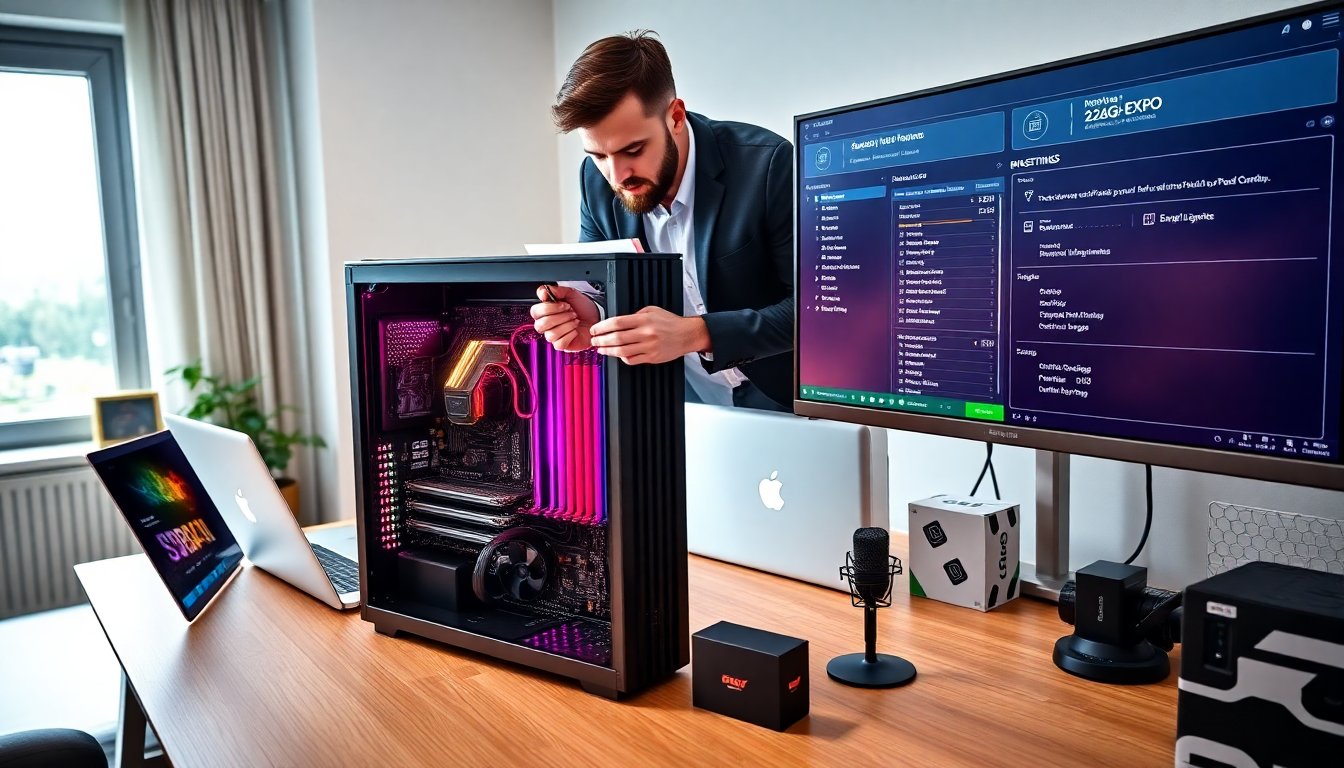
The gaming world has fundamentally shifted over the past few years, and 2026 marks a pivotal moment where the industry’s biggest trends are crystallizing into tangible changes. Whether you’re a casual mobile gamer, a competitive esports player grinding ranked matches, or a PC enthusiast chasing 4K 144fps, the landscape you’re navigating today bears little resemblance to even five years ago. Cloud gaming is finally maturing beyond promises, AI is actively reshaping how games adapt to individual players, and prize pools for esports tournaments are reaching eight figures. The stakes feel higher, the competition fiercer, and the opportunities more diverse. This is the golden age of gaming, and understanding what’s driving it, from platform convergence to technological breakthroughs, is essential for staying ahead of the curve.

Key Takeaways
- The gaming world has undergone fundamental transformation in 2026, with cloud gaming, AI integration, and esports legitimacy reshaping how players access and experience games across platforms.
- PC gaming maintains performance dominance with next-gen graphics cards enabling affordable 1440p 240fps gameplay, while consoles prioritize ecosystem integration and cross-platform play over raw hardware specifications.
- Mobile gaming now generates over $120 billion annually and rivals console experiences through cloud streaming technology, blurring the line between portable and performance-driven gaming.
- Esports has achieved mainstream legitimacy with prize pools exceeding $30 million, professional player salaries of $300,000–$1 million annually, and organized team structures mirroring traditional sports franchises.
- AI-powered adaptive gameplay systems, improved accessibility features, and stronger community moderation tools are making the gaming world more inclusive and sustainable for diverse player populations.
- The industry faces ongoing challenges with monetization transparency, diversity representation, and toxicity in competitive spaces, though measurable progress indicates these issues can be addressed through values-driven design decisions.
The Evolution of Gaming Across PC, Console, And Mobile
How PC Gaming Dominates With Advanced Graphics and Performance
PC gaming remains the undisputed leader in raw performance and visual fidelity heading into 2026. The latest graphics cards, RTX 5090s and AMD Radeon RX 9070 XTs, are pushing frame rates and visual quality to unprecedented levels. Gamers pursuing 1440p 240fps or 4K 60fps have legitimate, affordable paths now that weren’t feasible two years ago. The modding community continues to drive innovation, with community-created texture packs, balance overhauls, and even total conversion mods extending game lifespans indefinitely.
But performance isn’t just about specs anymore. DLSS 4 and FSR 4 technologies allow gamers to maintain stunning visuals while hitting aggressive frame targets. For competitive shooters like CS2, Valorant, and Apex Legends, sub-millisecond input latency from high-refresh monitors and optimized mice matters as much as the GPU itself. The competitive PC scene has never been more accessible, entry-level rigs for $800-$1200 can handle esports titles at 240fps, democratizing high-performance gaming.
Steam’s dominance continues uninterrupted, though competition from Epic Games Store and Xbox Game Pass for PC has forced Valve to remain competitive. Cross-save functionality between PC and cloud versions is becoming standard, not novelty. Ray tracing adoption has crossed the 70% threshold for major AAA releases, making real-time lighting the baseline expectation rather than a luxury feature.
Console Gaming’s Shift Toward Cloud and Cross-Platform Play
Console gaming in 2026 is less about hardware generations and more about ecosystem integration. The PlayStation 5 Pro and Xbox Series X updates have extended the current console cycle, but the real innovation is elsewhere: cloud integration. Xbox Cloud Gaming now handles remote execution seamlessly, allowing players to start a game on console and resume on mobile without friction. PlayStation has accelerated similar functionality through partnerships.
Cross-platform play, once controversial, is now industry standard. A shooter launched in 2026 almost certainly supports cross-play between PC, PlayStation, Xbox, and sometimes even Switch. Matchmaking algorithms have matured enough to account for controller-vs-keyboard differences, making these ecosystems feel balanced rather than disadvantageous to console players.
Backward compatibility remains a strong selling point. Players can dust off PS4 or Xbox One titles and run them on current hardware with enhanced frame rates and graphics. This means the console libraries have effectively tripled in practical size, reducing pressure to constantly buy new games. Subscription services like Game Pass (with 30+ new AAA titles annually) and PlayStation Plus Extra/Premium have shifted the business model from purchase-driven to retention-driven.
The one area where consoles haven’t fully caught up is graphics technology. While ray tracing is standard, dynamic resolution at 1440p 60fps (rather than stable 4K 30fps) has become the compromise most developers choose. Some developers continue pushing 4K capabilities, but the visual gains are increasingly marginal compared to smart 1440p upscaling.
Mobile Gaming’s Rise as a Mainstream Force
Mobile gaming isn’t the “casual” or “secondary” category anymore, it’s a pillar of the industry worth over $120 billion annually. Games like Genshin Impact, Honkai: Star Rail, and Diablo Immortal prove that console-quality experiences can exist on phones and tablets. Performance has skyrocketed: flagship devices run games that would have required a PS4 five years ago.
The shift toward premium mobile experiences reflects changing player expectations. While puzzle games and idle clickers still dominate downloads, the revenue concentration has moved toward action RPGs and live-service games. Battle passes, seasonal events, and gacha mechanics have become normalized across mobile, generating sustainable revenue even when games are free to play. The monetization friction that once annoyed players has become expected, and in many cases, well-designed enough to feel fair rather than predatory.
Cloud gaming on mobile is the real game-changer. Streaming Fortnite, PUBG, or Valorant to a $200 Android phone with minimal latency is now viable, not theoretical. Players no longer need to choose between portability and performance: they can have both. This has blurred the line between “mobile gaming” and “remote console/PC gaming on a mobile device.”
Platform fragmentation remains a genuine issue, though. iOS users face restrictions from Apple’s app store policies (particularly around game distribution and payment processing), while Android’s openness creates security and quality control challenges. Developers increasingly navigate this by releasing on PC/console first and adapting for mobile, rather than treating mobile as the primary platform.
Esports Has Become a Global Industry
Prize Pools and Sponsorships Reach Record Levels
The legitimization of esports as a revenue-generating industry is complete. Major tournaments now operate on the scale of traditional sports: The International (Dota 2) consistently exceeds $30 million in prize pools, League of Legends Worlds attracts teams with multi-million dollar budgets, and CS2 competitive circuits offer purses that rival professional poker. These aren’t niche gatherings anymore, they’re televised events on mainstream sports networks.
Sponsorship money flooding into esports has transformed the scene from grassroots competition to corporate-backed professional leagues. Tech companies like Intel, NVIDIA, and Corsair maintain title sponsorships. Mainstream brands, energy drinks, car manufacturers, financial services companies, now see esports as a legitimate advertising channel. A single tournament sponsorship can be worth $5-10 million, money that flows down to teams, venues, and player contracts.
Player salaries reflect this legitimization. Top-tier players in franchised leagues (League of Legends, Overwatch, Valorant) earn $300,000-$1 million annually as base salary, before streaming revenue, endorsements, or prize winnings. Mid-tier professionals can sustain full-time careers on $50,000-$150,000 annually. This economic viability has professionalized player development, young talent now trains with coaching staff, sports psychologists, and dedicated facilities, not just grinding solo queue.
Professional Gaming Teams and Player Development
Modern esports organizations operate like traditional sports franchises, complete with scouts, coaches, analysts, and support staff. Teams like T1, Fnatic, Team Liquid, and FaZe Clan maintain rosters across multiple games, creating organizational IP and brand loyalty that transcends individual titles. Player transfers involve contracts, buyouts, and competitive clauses that would be unremarkable in football or basketball but felt revolutionary to gaming just a decade ago.
Player development has become systematized. Academies operated by major organizations identify and train young talent, providing income and structure to promising players before they’re ready for franchise leagues. This pipeline creates stability, teams know exactly where their next generation will come from, and young players have a pathway to professionalism that doesn’t require overnight virality or exceptional fortune.
Coaching infrastructure has matured dramatically. Gone are the days of a single “team captain” calling plays and handling strategy. Now, organizations employ head coaches focused on macro strategy, individual coaches for mechanical skill improvement, analysts who break down opponent tendencies with advanced statistics, and support staff managing team health and mentality. This professionalization has raised the overall skill ceiling, even mid-tier teams execute strategies that would have seemed impossibly complex five years ago.
The psychological dimension has received overdue attention. Performance coaches, sports psychologists, and wellness programs are now standard in franchised leagues. High-pressure tournaments lasting weeks are mentally demanding: organizations that properly support player mental health have measurable competitive advantages. This shift has also made esports more sustainable as careers extend beyond the typical burnout window of 3-5 years.
Emerging Technologies Revolutionizing Gameplay
AI Integration and Adaptive Game Design
AI has moved from hype to implementation in game design and player experience. Adaptive difficulty systems now analyze player performance in real-time and adjust challenge dynamically, not crude rubberbanding, but intelligent pacing that keeps players in the “flow state” where gameplay feels challenging but achievable. Games like Elden Ring (with community-created difficulty mods leveraging AI learning) and newer FromSoftware titles show how AI can personalize notoriously difficult games without compromising vision.
NPC behavior powered by AI is becoming noticeably sophisticated. Rather than scripted patrol routes and decision trees, some NPCs now operate with language models and learning systems that allow dynamic interactions and emergent storytelling. A quest-giver might remember your previous choices and reference them weeks of play later. Combat AI adapts to your specific playstyle, learning whether you favor distance combat or aggressive rushes and responding accordingly. This creates an illusion of genuine intelligence that enriches immersion.
Generative AI for content creation is industry-standard in 2026, though with caveats. Procedural generation powered by AI creates more sophisticated and varied environments, reducing the manual overhead of hand-crafted level design. Dialogue synthesis and voice acting using AI (always with appropriate disclosure) accelerates localization and reduces production timelines. But, the backlash against AI art and writing without appropriate crediting remains culturally significant, and studios that lean too heavily on AI-generated assets face reputational damage.
The gameplay loop itself has been optimized using AI analysis of player telemetry. Developers track where players abandon games, what activities sustain engagement longest, and what reward structures maximize retention. This data-driven approach sounds clinical, but in practice, it means games are better-paced, less grindy, and more respectful of player time. The industry-wide pivot toward 60-80 hour “complete-in-one-season” campaigns instead of 150+ hour time commitments reflects this AI-informed design philosophy.
Virtual Reality and Immersive Experiences
VR gaming has finally achieved critical mass, though not in the way early enthusiasts predicted. Rather than dominating, VR occupies a specialized niche where it excels: immersive first-person experiences where presence genuinely enhances the experience. Half-Life: Alyx proved the concept years ago, but 2026 sees a mature library of VR titles that justify headset ownership.
MetaQuest 3 and PSVR2 have brought VR to more mainstream price points ($400-600 for capable systems), and mixed reality features (blending real-world camera feeds with digital content) have expanded possibilities beyond pure VR. Fitness games leveraging full-body tracking have created sustainable revenue streams, consumers continue paying monthly for workout content rather than one-time game purchases. Beat Saber, Supernatural, and similar rhythm/fitness hybrids have demonstrated that VR software can be subscription-friendly.
Technical barriers have diminished. Wireless VR is standard, eliminating cable clutter. Resolution approaches native 1440p per eye, making text readable and environments detailed. Haptic feedback through suits and controllers creates genuine tactile sensation, firing a gun, catching a ball, or melee combat genuinely feels different now. These improvements have reduced motion sickness and simulator sickness substantially, making VR accessible to player populations that previously couldn’t tolerate headset use.
But adoption remains limited compared to traditional gaming. VR still requires dedicated space, significant financial investment, and comfort with unfamiliar control schemes. Multiplayer VR gaming remains clunky compared to flat-screen alternatives. Most importantly, the killer app, the game that makes VR a must-have rather than a curiosity, still hasn’t materialized. VR remains a “when it’s the right game” experience rather than a platform that attracts millions of daily active users.
Ray Tracing and Next-Generation Graphics Standards
Ray tracing has transitioned from cutting-edge feature to standard practice. Virtually all major AAA releases released in the past year incorporate real-time ray tracing for reflections, shadows, or global illumination. The performance cost has fallen through improved algorithms and dedicated ray-tracing hardware acceleration in current-gen GPUs. Players expecting ray-traced lighting on console or high-end PC are no longer asking for a luxury: they’re expecting a baseline.
Frame generation technology, powered by DLSS 4 and FSR 4, has matured into something genuinely useful rather than a gimmick. These tools reconstruct frames between those rendered natively, using AI to predict pixel values. The artifacts that plagued early versions are mostly eliminated. Top-tier competitive players remain skeptical (perception of input lag during frame generation, but minimal, is unacceptable), but for story-driven single-player games or casual multiplayer, frame generation routinely makes 4K 60fps achievable on hardware that couldn’t otherwise reach that target.
Variable rate shading and other GPU optimization techniques have become invisible to players but profound in impact. Developers can allocate rendering resources to screen areas where the human eye is most sensitive, reducing overall GPU load without perceptible quality loss. Upscaling from lower native resolutions (using intelligent reconstruction rather than bilinear stretching) means 1440p visual quality from 1080p or lower rendering, dramatically extending hardware lifespan.
The visual ceiling reached in 2026 is objectively impressive. Compare a scene from a 2023 AAA title to the same setting rendered in current technology: the difference in material detail, lighting accuracy, and motion quality is substantial. But the question “when does it stop mattering?” is increasingly relevant. Going from 1080p 60fps to 1440p 60fps is transformative. Going from 1440p 60fps to 4K 60fps is an incremental improvement. Most players, if honest, would trade 20% increased visual quality for 50% faster load times or 30% less input lag.
Streaming Platforms and Content Creation Culture
Content creation has become inseparable from gaming itself. Twitch remains dominant but faces serious competition from TikTok (short-form clip content), YouTube Gaming, and platform-specific features on Discord. The economics have shifted toward creator sustainability, platforms are now genuinely interested in helping creators earn money through subscriptions, donations, and revenue sharing, not just driving traffic.
Streaming has professionalized to an extent that seems absurd when stated plainly: streamers hire editors, managers, thumbnail designers, and community moderators. Top streamers operate like media companies, with multiple income streams from platform revenue, sponsorships, merchandise, and collaboration deals. The barrier to “becoming a streamer” has simultaneously lowered (anyone with a phone and internet can broadcast) and raised (differentiation and audience growth require professional-level content).
The meta of streamer success has shifted. Raw mechanical skill (relevant primarily for competitive games) matters, but personality, community engagement, and consistent scheduling matter more. Ironically, extremely high-skilled players sometimes struggle to build audiences because they’re not particularly entertaining to watch. Conversely, charming, communicative players build dedicated communities even while playing the same games as thousands of others.
Content creator burnout is a recognized industry issue. Maintaining a streaming schedule (6-8 hours daily for most successful streamers) while remaining entertaining, engaging with chat, and simultaneously playing at a competitive level is genuinely grueling. The best-compensated creators are those who’ve built enough stable revenue that they can reduce streaming hours without financial anxiety. This has naturally encouraged burnout-prevention: shorter streams, higher production quality in fewer hours, and direct support mechanisms for creator wellbeing.
In-Game Communities and Player Engagement
In-game communities have matured from toxic breeding grounds to (in many cases) genuinely welcoming social spaces. Games have invested heavily in moderation, reporting systems, and community guidelines. The results are measurable: games with strong moderation show dramatically higher retention, higher spending, and more positive reviews from diverse player populations. It turns out that women, non-binary players, and minority communities are more likely to invest time and money in games where they don’t face harassment.
Guilds, clans, and player organizations form the backbone of long-term engagement in live-service games. A player might bounce between games, but finding a community worth logging in for (friends, supportive guild-mates, cooperative progression) is the strongest retention mechanism. Developers have responded by building better guild tools, better clan features, and better systems for matchmaking players into communities based on shared interests rather than just skill level.
Player feedback loops have become genuinely responsive. Community councils where players directly contribute to development decisions are now standard in major titles. Developers regularly survey players, test balance changes on public servers, and visibly incorporate community suggestions. This transparency (even when decisions eventually go differently than players hoped) builds trust and investment in the game’s future.
Toxicity remains a real problem in competitive games, particularly in ranked matchmaking. But the tools to address it have improved: better reporting systems, faster action against serial violators, and positive reinforcement for good behavior (seasonal cosmetics for good behavior, reduced queue times for highly-rated players). The rate of change is slow, gaming communities remain more toxic than ideal, but the trajectory is unambiguously positive.
Social gaming has also become more legitimate. Cozy games, player-versus-environment cooperative experiences, and social simulation games now represent massive audience segments. Balatro as a deck-building roguelike, Hades as character-driven action, and games like Unpacking or Spiritfarer as narrative-focused experiences demonstrate that “social” and “engaging” don’t require PvP competition. This has been positive for community health, players engaging because they genuinely enjoy the experience together rather than grinding ranked ladders tend to be less toxic.
Challenges Facing the Gaming Industry Today
Monetization Models and Player Concerns
Monetization has become the central controversy in modern gaming. Free-to-play games with aggressive monetization models (loot boxes, gacha mechanics, cosmetic pricing) have generated enormous revenue but also enormous backlash. The tension exists because players legitimately enjoy free access to quality games, but they reasonably object to cosmetic items costing $20-30 or feeling pressured into spending to remain competitive.
Loot boxes specifically have faced regulatory scrutiny globally. Belgium classified some loot boxes as gambling, warning of legal consequences. Other countries are considering similar legislation. This uncertainty has forced companies to be more transparent about odds and to offer non-RNG purchase options alongside gacha mechanics. The fear isn’t that players will stop spending, it’s that regulation could devastate the business model.
Battle pass systems have become the mainstream monetization approach, replacing loot boxes in many titles. The appeal is straightforward: players know exactly what they’re paying for, can see progress clearly, and face no randomness. A $10-20 seasonal pass feels more reasonable to players than $50 spent on loot boxes with no guaranteed rewards. Ironically, this feels more consumer-friendly while potentially more profitable for publishers if seasonal rewards are compelling enough.
Full-priced games ($60-70 at launch, sometimes more) combined with aggressive live-service monetization have frustrated players. When a single-player game launches at $70 and then introduces cosmetic passes, season systems, and cosmetics, players feel doubly charged. The backlash against Diablo: Immortal, Overwatch 2’s monetization, and The Sims 4’s endless DLC demonstrates that players have limits to what they’ll tolerate.
Microeconomic sustainability remains unresolved. Developers want predictable revenue to fund ongoing development. Players want reasonable costs that don’t feel exploitative. Live-service games require constant updates, new content, and balance adjustments, all expensive. The pressure to maximize monetization creates perverse incentives: making games deliberately grindy to encourage paid progression, designing battle passes to feel incomplete without payment, or creating FOMO (fear of missing out) by rotating limited cosmetics that won’t return.
Inclusivity, Diversity, and Accessibility Standards
Accessibility in gaming has shifted from “nice to have” to business imperative. Games featuring robust accessibility options (colorblind modes, remappable controls, text-to-speech, aim assistance, difficulty sliders that don’t lock achievements) are seen as more polished, more respectful, and more commercially viable. Baldur’s Gate 3, Spider-Man 2, and Alan Wake 2 have demonstrated that accessibility can be extensive without compromising vision.
The practical impact is substantial: disabled players who were previously excluded from games now can participate. A player with motor impairment can use advanced aim assist or turn-based mode to enjoy shooters. A deaf player can turn on subtitles and visual cues for audio events. These aren’t compromises to game quality, they’re extensions that ensure the game is actually playable across diverse player populations.
But accessibility remains inconsistently implemented. Many mid-budget games launch with minimal accessibility features. The expectation that accessibility should be “optional” or “post-launch patched in” persists, even though evidence that designing with accessibility in mind from day one is more cost-effective. Publishers sometimes treat accessibility as a PR checkbox rather than a genuine commitment.
Diversity in character representation and storytelling has improved noticeably, though progress remains uneven. Games now feature protagonists from diverse racial, ethnic, gender identity, and sexual orientation backgrounds without it feeling tokenistic. Studios are hiring more diverse development teams, which naturally results in games that reflect broader experiences. The remaining issue is that diverse representation in gaming remains notable, it shouldn’t be an achievement, but standard. Gaming culture continues evolving, with younger players expecting diverse casts as default rather than requesting it as special accommodation.
Toxicity toward women, non-binary, and minority players in competitive spaces remains significant. While communities are measurably healthier than they were 5-10 years ago, harassment campaigns and targeted abuse are still disturbingly common. The industry response, better reporting tools, faster bans for toxic behavior, community guidelines with teeth, has improved the situation but hasn’t solved it. Cultural change moves slowly, especially in competitive communities where winning sometimes justifies extreme behavior in players’ minds.
Representation in the industry itself (developers, designers, leadership) remains skewed toward white men, though diversity hiring initiatives are creating measurable progress. This has tangible creative impact: games developed by diverse teams reflect broader creative perspectives and are more likely to include nuanced representation of underrepresented communities. The business argument is straightforward: diverse teams make better games that appeal to wider audiences.
The Future of Gaming: What’s Coming Next
Anticipated Game Releases and Franchise Innovations
The release calendar for 2026-2027 demonstrates that the big publishers aren’t running dry on ideas, even though industry consolidation and franchise fatigue among portions of the player base. Major game announcements from studios indicate sequels, new IPs, and long-awaited revivals in development.
Franchise evolution is taking interesting directions. Rather than incremental improvements (which worked for sports games but feels stale for story-driven titles), studios are experimenting with different genres within established universes. A FromSoftware-style Tekken revival, Metroid Prime pivoting from first-person to third-person, or entirely new creative directions within beloved properties represent risk-taking that could either revitalize stale franchises or spectacularly miss the mark.
Independent developers continue producing the most innovative work. Studios like Supergiant Games, Annapurna Interactive, and individual developers using engines like Unity and Unreal are creating critically acclaimed titles that outpace their budgets. The democratization of game development (free access to professional engines, abundant tutorials, supportive communities) means innovation increasingly originates from unexpected sources rather than major publishers.
Cross-media franchises are becoming the standard expectation. A successful game now expects to spawn TV series, films, and transmedia storytelling. The success of The Last of Us adaptation and Castlevania: Nocturne demonstrates mainstream viability. Conversely, Halo and Sonic the Hedgehog films proved that poor adaptation can damage franchises. Studios are becoming more thoughtful about protecting IP across mediums.
Technological Advancements on the Horizon
Hardware evolution continues but at a slower pace than historically. CPU performance gains have plateaued: GPU improvements are meaningful but require increasingly exotic cooling solutions and power consumption. The real innovation is in optimization and efficiency rather than brute force specs.
Cloud gaming maturation will be the major shift. Current iterations have acceptable latency for story-driven games but remain problematic for competitive play. As streaming infrastructure improves (5G, fiber-optic internet expansion), latency will drop to imperceptible levels. This would effectively eliminate hardware barriers to gaming, playing Elden Ring on a $200 chromebook becomes legitimate rather than theoretical. The business model implications are profound: owning expensive hardware becomes optional.
Neural processing units in consumer hardware will enable on-device AI for increasingly sophisticated game behaviors. Rather than cloud-based AI analysis, local neural processors will power adaptive difficulty, dynamic NPC behavior, and real-time graphics optimization. This reduces latency and eliminates reliance on server infrastructure for core gameplay features.
Standards like Variable Rate Rendering and Mesh Shaders will become universal, pushing performance further without additional hardware demands. Motion capture technology for character animation will improve to the point where human-like movement is indistinguishable from motion-captured actors.
Input devices will diversify. Eye-tracking integration for aiming and targeting, haptic feedback suits for full-body sensation, and pressure-sensitive controllers enable new interaction paradigms. These remain niche in 2026, but prototype testing suggests mainstream adoption in 5-10 years.
The technical frontier in 2026-2027 isn’t about making individual pixels more detailed, it’s about creating systems that simulate believable, responsive virtual worlds at scale. Game reviews and industry coverage increasingly emphasize how games feel to play rather than purely visual metrics. This suggests that the next generation of progress prioritizes responsiveness, latency, and interactivity over raw visual fidelity.
Conclusion
The gaming world in 2026 is simultaneously more accessible and more stratified than ever. A person with a smartphone can access console-quality games through cloud streaming. A player with $1,000 can build a high-end PC capable of maxing out any game at 4K 60fps. Competitive esports attracts global audiences and professional salaries. Content creators build careers and communities. At the same time, players feel fatigued by monetization schemes, concerned about industry consolidation, and frustrated by recurring toxicity in competitive spaces.
The through-line connecting all these threads is specialization. Gaming no longer means a single thing, it encompasses mobile puzzle games, 200-hour narrative experiences, rhythm games, competitive shooters, cozy social simulations, and VR immersion. Different player demographics have found their niche, and the industry has become sophisticated enough to support all these niches simultaneously. This is genuinely positive: it means someone can find exactly what they’re looking for rather than forcing themselves into the most popular genre.
The challenges are real and require industry-wide commitment to address. Monetization needs sensible constraints. Diversity hiring should continue accelerating. Accessibility should be standard, not special. Toxicity in competitive spaces demands ongoing investment in moderation and community culture. These problems won’t be solved by market forces alone, they require conscious design decisions and values-driven leadership.
What’s encouraging is that 2026 shows evidence that these improvements are possible. Communities are healthier. Disabled players can access more games. Diverse representation is increasing. Monetization is becoming more transparent and consumer-friendly. The industry isn’t perfect and hasn’t solved these problems, but the trajectory is encouraging.
The gaming world is changing faster than most players realize. Whether through technological advancement like ray tracing and AI integration, platform convergence bringing PC and console closer together, or esports legitimacy attracting mainstream attention, the industry is fundamentally different from even three years ago. Understanding these shifts, what’s driving them, what concerns them, and where they’re heading, is essential for staying engaged with gaming culture. The next five years promise even more dramatic change.